Measurement & Instrumentation
Miniature Bearing Applications
The credibility of precision measurement instruments is built on the accuracy of their motion systems. Microscope stage movement, rotary encoder angle output, flow meter impeller rotation — the precision of every measurement action is directly related to miniature bearing torque uniformity, vibration characteristics, and long-term stability.
Bearing challenges in measurement & instrumentation
Measurement equipment bearing requirements focus on low and uniform torque, ultra-low vibration, ultra-small form factor, and full equipment lifetime reliability.
Low & Uniform Torque
Rotary encoder, flow meter impeller, and sensor measurement accuracy is directly affected by torque fluctuation. Instrument bearings must provide low and uniform starting and running torque, eliminating mechanical error sources in measurement signals.
Ultra-Low Vibration
Precision microscope stage movement and optical scanning systems require ultra-low vibration bearing support. Vibration directly translates to image blur or measurement noise, and precision bearing NRRO control is the mechanical foundation of instrument resolution.
Ultra-Miniaturization
Space is extremely limited in handheld measurement instruments, high-resolution microscope lens modules, and gas analyzers. Miniature instrument bearings in the 1 to 10 mm bore range must achieve high precision grades within ultra-small dimensions.
Lifetime Reliability
Measurement equipment is typically difficult to disassemble for repair and must operate reliably long-term in extreme environments from Nordic cold to desert heat. Miniature instrument bearings are typically lubricated only once for the entire equipment lifecycle, making lubricant selection a critical design decision.
Bearing solutions for measurement & instrumentation
The quality and precision of myonic miniature ball bearings are key to measurement instrument performance and reliability. From high-resolution microscopes to sensors and flow meters, precision bearings ensure measurement accuracy and long-term stability.
Instrument-Grade Precision Bearings
Precision miniature ball bearings meeting instrument bearing definition standards: low and uniform starting/running torque, strict vibration limits, defined contact angle or preload, and high cleanliness standards. Suitable for rotary encoder, sensor, and precision measurement instrument rotational support.
- Low and uniform starting/running torque
- Precision vibration grade limits (application-specific)
- Defined contact angle or preload configuration
- High cleanliness standards reducing measurement interference
- ABEC 5/7/9 precision grades available
Microscopy & Optical Instrument Bearings
High-resolution microscope lens modules and stage movement mechanisms require ultra-low vibration precision bearing support. Miniature bearing low NRRO ensures precise small-movement repeatability, serving as the mechanical foundation for microscope resolution limits. Suitable for electron microscope sample stages, optical scanning systems, and precision focusing mechanisms.
- Ultra-low NRRO ensuring image clarity
- Precise small-movement repeatability
- Suitable for electron microscope sample stages
- Suitable for precision optical focusing and scanning mechanisms
- Ultra-small form factor for compact lens modules
Flow Meter & Sensor Bearings
Gas meter, flow meter, and anemometer impeller rotation accuracy determines measurement precision. Precision miniature bearings provide low-friction precise rotational guidance while maintaining long-term reliability in harsh outdoor environments (from extreme cold to heat), with one-time lifetime lubrication design reducing maintenance requirements.
- Low-friction precise rotational guidance
- Wide temperature range design (extreme cold to heat)
- One-time lifetime lubrication, maintenance-free design
- Suitable for gas meters, flow meters, anemometers
- Suitable for rotary encoders and potentiometers
Real-world measurement & instrumentation bearing applications
The following showcases typical application scenarios and technical highlights of miniature bearings in measurement and instrumentation technology.

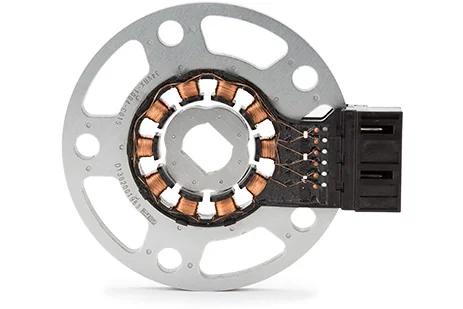


Some images on this page are AI-generated illustrations used where authentic photographs are not readily available. They are for visual reference only and do not represent actual product appearance or specifications.
Explore related applications
Need a miniature bearing solution?
Our application engineering team is ready to provide technical consultation and product selection guidance