Lubrication is a design element and must therefore be defined during the development phase of a machine or application. If the lubrication is only selected after design and construction is complete, based on experience this is likely to lead to considerable difficulties. A carefully thought out lubrication concept is therefore a sign of a state-of-the-art and well devised design.
Parameters to be taken into account in selecting the lubricant, amongst others, include:
- Operating conditions (speed, accelerations, stroke, load, installation orientation)
- External influences (temperature, aggressive media or radiation, dirt accumulating, moisture)
- Subsequent lubrication (period of time, quantity, compatibility with other lubricants)
- Compatibility (with corrosion protection, with integrated materials such as plastic cages)
- Tracks (geometry, surface roughness, hardness, material, coating, wettability)
Technical and economic considerations determine the lubricant and process to be used. Generally lithium-soap-based roller bearing greases are used to lubricate (alloyed greases KP2K in accordance with DIN 51502 or DIN 51825). Oil dispensers or occasional oiling via oil nipples fully meet the demands of the guideways. For minimal roller frictional resistance lubrication with mineral-oil-based oils is recommended (CLP or HLP in viscosities of ISO VG 15 to 100 in accordance with DIN 51519).
The lubricants are normally applied through the spacing between the linear guideways and the recirculating units or through the lubrication holes in some instances available as standard or lube nipples in the recirculating units. If this is not supported by the design (e.g. in the case of vertical installation), on request linear guideways with lube holes can also be supplied. Particularly advantageous are oil mist lubrication methods, which help to prevent dirt accumulating on the guideways with their slight excess pressure. Their acceptability is greatly limited, however, due to their environmental impact. Cutting-oils or water soluble coolants are to be kept away from the guideways, however, because they dilute or wash away the available lubricant. In addition, coolants tend to stick when drying out. Lubricants with solid additives are inappropriate.
Subsequent lubrication intervals
Subsequent lubrication intervals depend on the aforementioned operating conditions and external influences and cannot be therefore be calculated. That is why the lubrication point must be observed over a lengthy period of time.
Values based on historical experience show that with normal use subsequent lubrication of up to 2 to 5 times is sufficient, spread over the calculated service life.
Lubrication of the recirculating unit NRT
There are three ways of lubricating the NRT.
| Variant | Description |
|---|---|
| Variant A: | Lube nipple on each end face |
| Variant B: | Lube opening on the top |
| Variant C: | Optional connection for a centralised lubricating system |
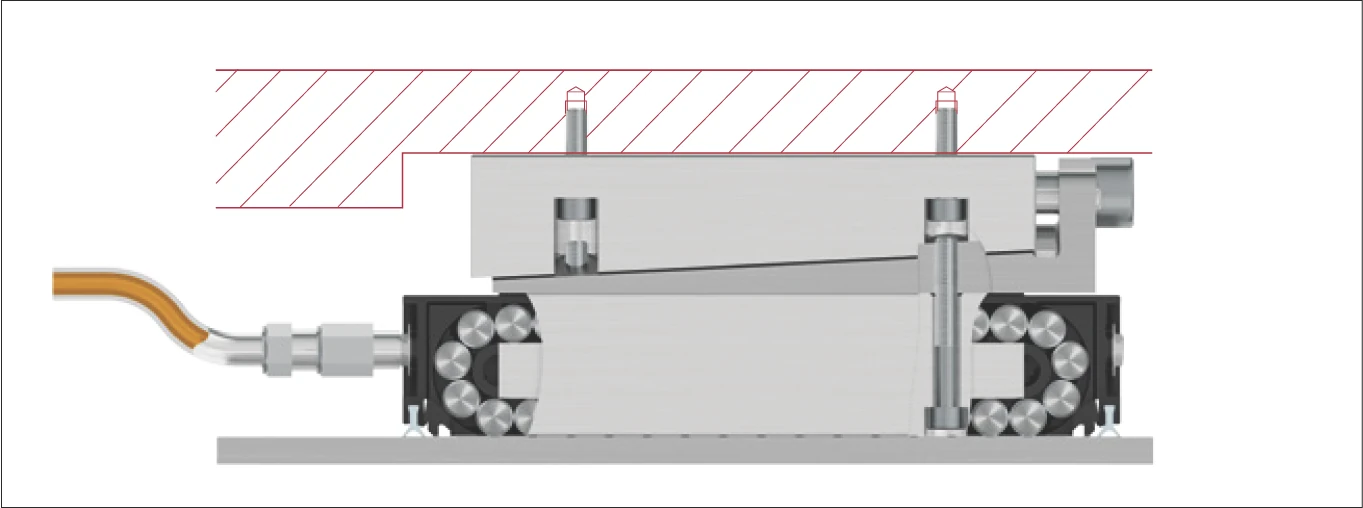
Variant A: Lubrication by means of the lube nipple
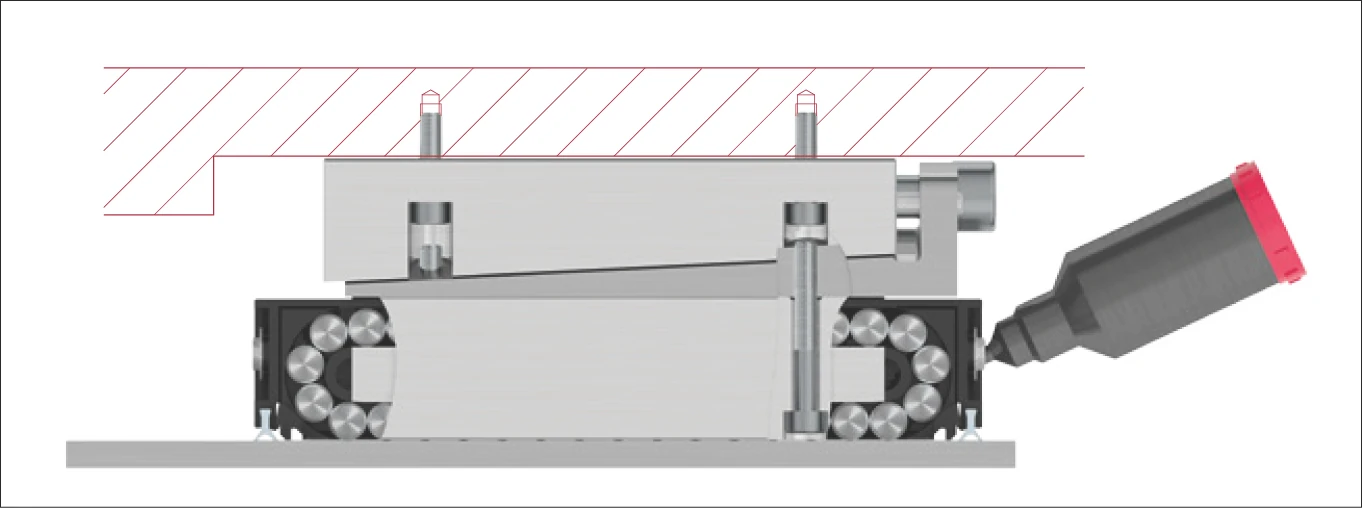
Variant B:
Oil delivery through the lube opening on the top
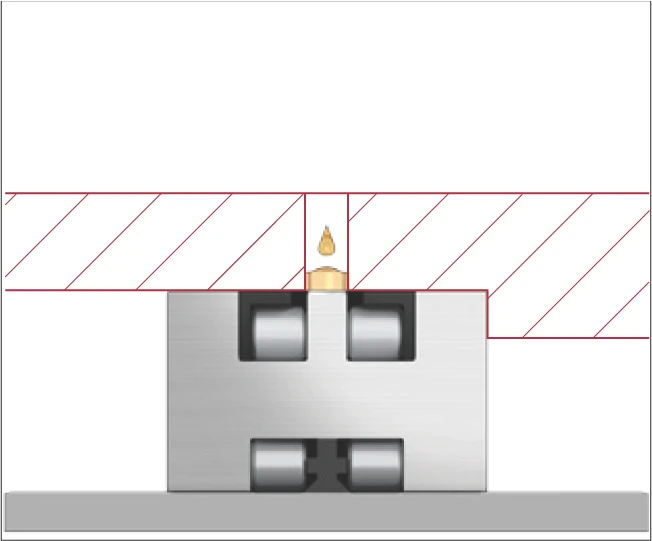
Oil delivery through the lube opening on the top through the preload wedge NRV
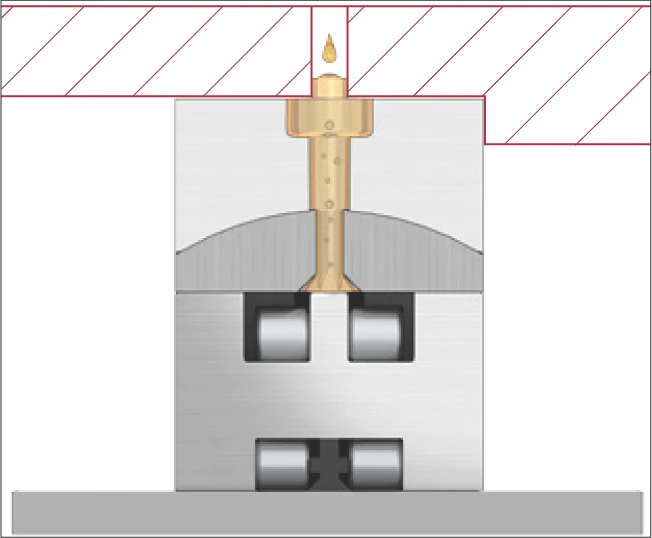
Variant C: Centralized lubricating system (option ZS)